
Allodynia in chronic pain can make ordinary sensations feel painful: a towel drying your skin, shower water, a bedsheet shifting, or the pressure of sitting. In pain medicine, allodynia means pain because of a stimulus that rarely provokes pain.
This guide explains the distinct patterns of allodynia, why it can spread or change over time, and practical strategies to rebuild comfort without turning your experience into a diagnosis.
Raw Nerves: Making Sense of Allodynia
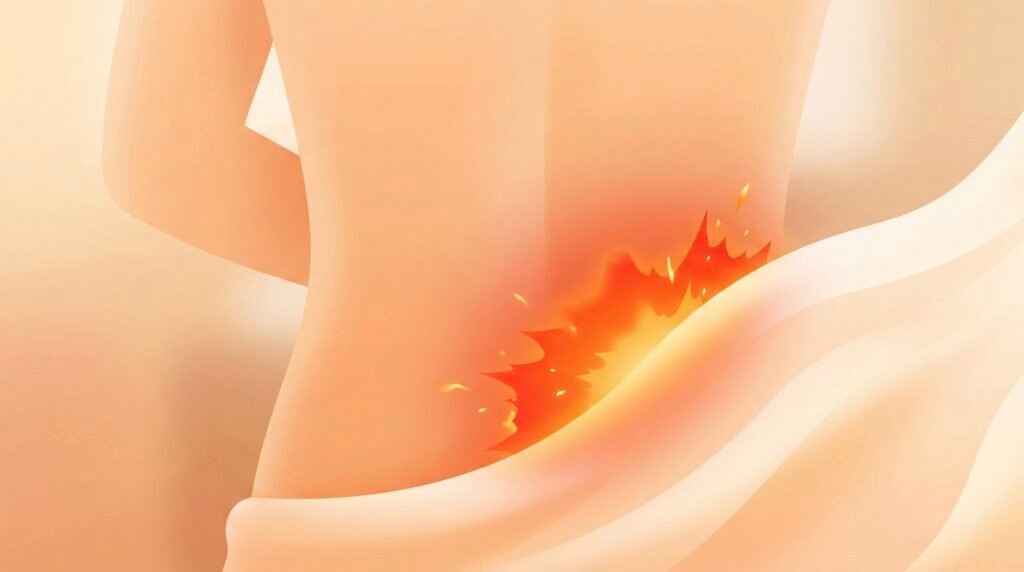
About six months ago, I was at a friend’s home when, after taking a shower, I experienced one of the weirdest sensations ever. When running the towel on the right side of my back, just above the waist, I felt a combination of pain and burning. It was as if I had a wound that had partly healed, but someone ran a nail across the newly healed skin and ripped it open again. The pain lingered for a while after that.
I remember feeling very confused. I was coming off a three-day motorbike trip, an episode of hemorrhoids, and a painful period because of endometriosis. Just to be clear, I don’t want to brag about all these unwanted “guests,” but it is important to understand the context. This new sensation seemed like the consequence of having those three events happen at the same time.
I didn’t look at it like that when it happened, but later that month it became clearer through my physiotherapist. It felt like it would pass, as other sensations had in the past, but it stuck around.
I believe it’s worth mentioning that the affected area expanding and worsening did not happen on its own; it was aggravated by a stressful situation and a quite “generous” amount of synthetic progesterone used to treat my endometriosis. Chronic pain doesn’t like competition.
Just like when you burn dry hay and the scorched area spreads, the sensitive zone expanded, becoming reactive not only to touch but also to temperature and pressure. As a result, hot showers and the heating pad that used to bring me so much mental and physical relief are gone. I can only use heat on the left side of my body, which is also the only side I can sleep on. Allodynia has made chronic pain even harder to bear.
I did what I always do when something doesn’t seem to make sense: I looked for an explanation. Before throwing myself into the research papers, I posted about this situation on Reddit to understand how others deal with it. Well, there was a river of comments from people experiencing this symptom. I was in awe of how complex, insidious, and persistent it can be.
One comment caught my attention. It was from someone who recognized themselves in my description but had no idea it had a name. Then the questions in my head started to accumulate: What can it be mistaken for? Why does it appear, and how long does it stay with us? Does it ever go away? I simply had to put them all down in order to find answers. This article is my best effort to share scientific discoveries, practical help, and methods to manage this symptom.
Now I am trying things to see what can help improve, or even get rid of, this symptom: brush desensitization, lukewarm showers, pillow support, and avoiding everything else that could make it worse. I’ve also started using 5% lidocaine patches. After applying four plasters (one each day for 12 hours), I haven’t seen much improvement overall, but I can say that the skin in that area is not as sensitive as it was before to touch and temperature. However, the pain and burning sensation have stayed with me. It also has not improved in terms of pressure, as I still have to sleep only on the left side. According to the instructions, you should apply these patches for 2 to 4 weeks until your symptoms improve or disappear completely. I will update this article to let you know the result.
That was my experience, but I didn’t tell you that story just to vent. I told you because you are likely standing at that exact same crossroads right now, so let’s look at how you can choose a better path.

Allodynia vs. Hyperalgesia
These two often show up together, but they describe different kinds of sensitivity.
Allodynia is pain from a stimulus that is usually neutral: water that feels sharp, a soft sheet that feels burning, clothing that suddenly feels abrasive. The input would normally read as “safe,” yet it’s experienced as painful.
Hyperalgesia is an amplified reaction to something that is already painful. A pinprick, bump, sore muscle, or deep pressure can feel far more intense than expected.
In real life, this can be confusing because both can exist in the same place. In my case, the new “patch” felt like a skin-level problem at first. Later, a burning sensation pulled my attention upward, where I also felt deeper muscle pain, tension, and aching. My question shifted from “what is this?” to: is this also allodynia, or is it something more? What made the most sense over time was that both were present: surface sensitivity consistent with allodynia, plus a deeper pain layer that fits hyperalgesia.
There’s another pattern worth mentioning: after multiple pain hits close together, the nervous system can become reactive and once it learns that pattern, it may keep treating repeated pain as a reason to stay more sensitive.
The 4 Types of Allodynia
Clinicians classify allodynia by what triggers it. Knowing your main trigger is often the first practical step to managing allodynia in chronic pain.
1) Dynamic mechanical (movement)
Triggered by light brushing or stroking across the skin.
Many people notice:
- when drying with a towel (especially rubbing)
- when bedsheets shift over the legs
- when shower spray moves across the back
- sometimes with air movement or wind
2) Static mechanical (pressure)
Triggered by sustained contact. It isn’t movement that hurts; it is weight or compression.
Common triggers:
- waistbands, bra straps, underwear bands
- chair pressure against thighs or hips
- mattress pressure when lying on one side
3) Punctate (pointed touch)
Sensitivity to points of contact. A fingernail edge, a clothing tag, or a dull object can feel piercing.
4) Thermal (temperature)
Mild temperatures that are not damaging feel painful. Lukewarm water may burn, or cool air can feel extreme.
Can you have more than one type?
Yes. Many people experience multiple types at once. When several types show up, it can reflect a broader sensitivity pattern rather than one local issue.
Why Light Touch Hurts More Than Pressure
It can feel confusing to tolerate a firm hug but recoil from a light brush. In allodynia in chronic pain, that pattern is common.
The signal is different
Light touch – brushing, fabric friction, water spray – creates rapidly changing sensory input. When sensitivity is high, this fast-changing input can be harder to filter. Firm pressure tends to be steadier and, for some people, easier to tolerate.
Different processing can contribute
Light touch and deep pressure send distinct patterns of input. In allodynia, the spinal cord and brain can amplify light-touch input and interpret it as painful, often because of reduced inhibition and increased “gain” in sensory pathways. Firm pressure is steadier input and, for some people, easier to tolerate than fast-changing brushing or friction.
Where Allodynia Appears (And What It Can Suggest)
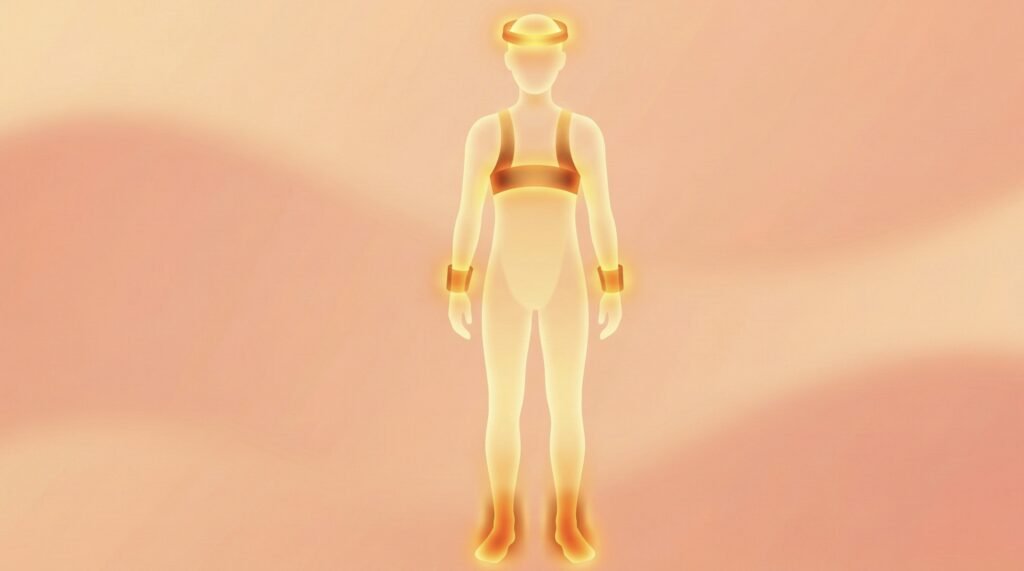
Location can provide useful clues, though it does not diagnose the cause on its own.
Head and Face
Sensitivity here is often linked with migraine-related cutaneous allodynia, and can also appear in some facial neuropathic pain patterns.
Common sensations:
- pain from brushing hair or washing the scalp
- discomfort from ponytails, clips, hats
- pain from washing the face, wearing glasses, masks, or skin friction
Torso (chest, ribs, back)
Allodynia on the trunk can feel severe because clothing contact is hard to avoid.
Common sensations:
- a band-like burning around the ribs
- bra strap or waistband contact that feels intolerable
- back skin that feels raw with light touch
Possible contexts include postherpetic neuralgia (after shingles), post-surgical neuropathic pain, radicular patterns, and broader persistent pain presentations.
Arms and Hands
Sensitivity here often interferes with sleeves, jewelry, typing, and daily tasks.
If allodynia is accompanied by obvious changes such as swelling, temperature difference, color change, and movement stiffness. Especially after injury, clinicians may evaluate for a CRPS(Complex Regional Pain Syndrome) pattern.
Legs and Feet
This is a common site for length-dependent neuropathic patterns.
Common sensations:
- socks feeling unbearable
- bedsheet contact painful over toes
- cold tile or cool air triggering burning discomfort
In some neuropathies, symptoms start in the toes and move upward.
A quick “pattern lens” (helps you decide what to explore next)
This is not a diagnosis, just a way to organize what you’re noticing in allodynia in chronic pain:
- Mostly scalp/face + headache pattern → often fits migraine-related sensitivity.
- A defined patch after shingles/surgery or along a nerve path → can fit localized peripheral neuropathic pain (topicals may be especially relevant).
- Widespread sensitivity + multiple triggers + sleep disruption → may reflect broader sensitization/nociplastic features (often helped by pacing, sleep support, and gentle, graded exposure, ideally with clinician guidance). This overlaps with the approach in Reframing Chronic Pain: What it is, Why it helps, How to start.

The Mechanics: Why It Happens, Spreads and Moves
Allodynia is a symptom and also a mechanism. It often connects to chronic pain through:
- nerve-related mechanisms (neuropathic pain)
- central amplification (sensitization)
- migraine-related sensory sensitization
Recent science: why touch can become painful (why this matters)
Touch starts as a mechanical signal like fabric moving, water hitting the skin, a towel brushing. Specialized receptors in the skin and nerves convert that force into electrical signals that the brain usually reads as touch.
Research has identified specific touch-sensing channels on nerves that are crucial for detecting gentle contact. In injury or inflammatory states, touch pathways can contribute more strongly to pain signaling than they normally would. This doesn’t give a routine clinical test in most clinics today, but it does provide a credible “how”: a sensation that is typically neutral can be processed as painful when sensitivity is high.
When a Patch Spreads: What It Can Mean
An allodynia “patch” can expand within the same region, and for some people it can feel more widespread. This can happen in persistent pain states where the nervous system becomes more reactive to sensory input over time.
Spreading within a region
With ongoing pain input (for example, from deeper tissues like back or hip structures) plus repeated everyday triggers (friction from clothing, pressure from sitting/sleeping, temperature changes), the system can become more responsive to signals coming from nearby skin. As a result, sensitivity may extend beyond the original spot. A deep pain problem can feel like it has an added surface sensitivity layer.
Gradual vs. sudden spread
- Gradual spread (days to weeks) is common. People often notice borders widening slowly, and that the “linger time” after a trigger lengthens before it improves.
- Sudden or rapidly spreading symptoms (hours to a couple of days) can occur during flares in conditions where sensitivity is strongly modulated, but it deserves more attention if it is intense, unfamiliar, or escalating.
What to track (more useful than intensity alone)
- borders: outline the sensitive zone every few days
- triggers: brush vs pressure vs heat/cold
- linger time: how long it stays revved up after a trigger
Progress often shows up first as shorter linger time, then smaller borders.
Why it can shift
It can be unsettling when sensitivity changes location. Shifts can happen when symptoms are strongly influenced by nervous system modulation (common in migraine and some persistent pain conditions). This is one place where the skills in Can You Train Your Brain to Beat Chronic Pain? help.

How Long Can Allodynia Last? Typical Patterns Over Time
Allodynia can be brief, episodic or persistent. The time course often depends on what is driving it and how frequently the area gets re-triggered.
Pattern 1: Short episodes (hours to 1–2 days)
Some people get a short-lived “patch” that fades within a day. This is commonly described in migraine-related cutaneous allodynia, where skin sensitivity can develop during an attack and often improves as the attack resolves.
Pattern 2: Flares lasting several days to a few weeks
Another common pattern is a flare that persists for several days and then gradually calms down. People often notice this after periods with more triggers: more friction (clothing, towels), more pressure (sitting, sleeping), temperature shifts, poor sleep, illness, or a heavy workload. In this pattern, the “settling time” after a trigger can lengthen for a while, then shorten again as triggers come down.
Pattern 3: Persistent allodynia (months to years)
Allodynia can also become long-lasting, especially in certain neuropathic pain contexts. Examples include:
- Postherpetic neuralgia (after shingles), where pain and touch sensitivity can persist for months or longer.
- In small fiber neuropathy, patients frequently experience burning pain and allodynia/hyperesthesia, with symptoms typically intensifying at night or while resting.
- CRPS, where allodynia can be prominent and symptoms may persist and sometimes spread, especially without early support.
Does it go away abruptly or slowly?
Both can happen.
- Abrupt improvement is more typical when allodynia is tightly linked to a shorter episode (for example, sensitivity resolving as a migraine attack ends).
- Gradual improvement is more common when the area has been repeatedly re-triggered. In that case, progress often looks like shorter linger-time after triggers and fewer daily “set-offs,” even before intensity fully drops.
One useful tracking question: after a trigger (towel, shower, clothing), does the lingering burn settle faster over the next few weeks? That trend often matters more than a single tough day.
The Feedback Loop: How Allodynia Fuels Chronic Pain
Allodynia is rarely an isolated symptom. It can raise overall pain load.
Repeated input can keep the system reactive
When clothing, air movement, water spray, or sitting pressure repeatedly provokes symptoms, sensitivity can stay elevated.
Avoidance can create a second layer of pain
When friction hurts, it’s natural to move less or guard posture. Over time, that can increase stiffness and reduce conditioning, which is why a paced approach like the one in Movement and Chronic Pain: Why Moving Feels Risky and How to Rebuild Trust in Your Body matters.
Sleep disruption is common
Allodynia often feels worse at night because you’re dealing with more contact (sheets, clothing seams, pressure from the mattress), fewer distractions, and a longer time in one position. That combination can make it harder to settle, stay asleep, or find a truly comfortable posture. If nights are your hardest time, you may want to read Why Chronic Pain Gets Worse at Night – What Helps, which breaks down common reasons symptoms ramp up after dark and what to try.
Touch becomes complicated
When touch becomes painful, people can lose a calming input they relied on (hugs, hand-holding, massage). That shift can affect connection and boundaries, which is a big theme in Boundaries and Chronic Pain: Say “No” Kindly, Protect Your Energy, Stay Connected.
What Can Resemble (or Cause) Allodynia
Clinicians often check for these four factors to distinguish between local skin issues and deeper nerve problems:
- Visible skin conditions (The True “Mimic”): rashes, infections, or burns. If the skin is visibly red or broken, the pain is likely local inflammation rather than nerve sensitization.
- Shingles history: even after the rash fades, the virus can leave nerves damaged and sensitive (postherpetic neuralgia).
- Small-fiber neuropathy: this affects nerve endings and often starts in the hands or feet (“stocking-glove” pattern), stemming from specific nerve damage.
- CRPS signs: unlike isolated allodynia, it affects a limb and usually includes visible changes like swelling, skin color fluctuation or stiffness.
Diagnosis and Assessment
Allodynia is identified clinically, through your description and a physical exam, rather than MRI or X-ray. Imaging can help rule out certain structural problems, but it doesn’t measure touch sensitivity, nerve signaling, or how your brain and spinal cord are processing input.
1) At home: track your pattern (so you can describe it clearly)
Trigger (what sets it off)
- light brushing vs firm pressure
- water spray vs still water
- heat vs cold
- clothing friction vs compression (waistband, bra strap)
- sitting, lying on it, leaning, backpack straps
Borders (where it starts and ends)
- can you trace the outline?
- does it follow a strip/band pattern (around ribs, down a leg)?
- does it stay on one side, cross the middle, or shift locations?
Linger time (what happens after the trigger stops)
- does it fade quickly, or does it echo/burn for minutes or hours?
- does it throb or stay “switched on” after a shower, towel, or clothing contact?
Timing and context
- worse at night or after long sitting?
- worse after poor sleep or a stressful day?
- changes around cycle/hormonal shifts or after starting/stopping a medication?
2) In the exam: bedside sensory testing (what clinicians often do)
A good exam doesn’t just ask, “does it hurt.” It tries to identify which kind of input triggers it and whether the pattern suggests a local nerve problem, broader sensitization, or a mix.
Common checks include:
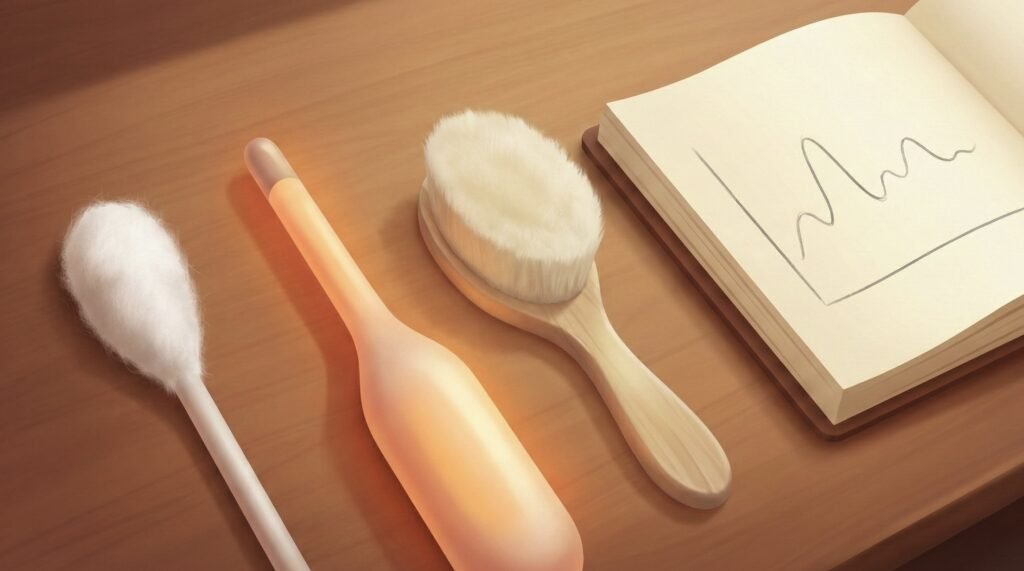
- Light brush/cotton (dynamic allodynia): gentle stroke, comparing the sensitive area to a normal area.
- Gentle pressure (static allodynia): pressing and holding to see whether steady contact is easier or harder than movement.
- Pinprick/sharp-dull (helps separate touch pain from amplified pain): useful when allodynia and hyperalgesia are both suspected.
- Temperature comparison: helpful when showers, heat, cold air, or cold floors are major triggers.
- Side-to-side comparison: comparing left vs right often clarifies a nerve-map pattern.
3) What physiotherapists often add to the picture
Many physiotherapists also look at posture, muscle guarding, movement avoidance, and how symptoms behave with gentle exposure.
4) QST (when available)
Quantitative Sensory Testing (QST) uses calibrated tools to measure thresholds for touch, pain, and temperature. It can document sensory gain (like allodynia or hyperalgesia) and sensory loss patterns.

Practical Management Strategies
Start with the strategy that matches your main trigger. This is often the most workable approach for allodynia in chronic pain.
Strategy 1: Friction control (dynamic allodynia)
- smooth, tag-less, seamless fabrics
- a smooth base layer under looser clothing (to reduce fabric movement)
- pat-dry sensitive zones; avoid rubbing
- bedding textures that glide more easily
Strategy 2: Pressure offloading (static allodynia)
- redistribute pressure points (cushions, seating adjustments)
- frequent small shifts
- pillows for sleep positioning to offload the sensitive area
Strategy 3: Thermal and water management
- lukewarm water
- gentler spray pattern/lower pressure
- pat dry; allow a short cool down before dressing if warmth triggers symptoms
Strategy 4: Sensory discrimination training
Short, structured practice:
- light touch on the area (or just around it)
- identify the exact location/texture
- confirm visually
- keep it brief and consistent
Goal: clearer sensory mapping and reduced reactivity, not endurance.
Strategy 5: Systemic support (sleep, pacing, simple regulation)
Sensitivity often rises when your system is depleted (poor sleep, stress load, illness, overdoing activity, long immobility). Pacing and short daily practices (slow breathing, gentle movement within tolerance) can reduce day-to-day swings.

Medical Treatments to Discuss
Disclaimer: This section supports informed conversations with a clinician. It does not replace medical advice.
1) Common first-line options doctors use for nerve-type sensitivity
These are commonly used when pain has nerve-like features, burning, or touch sensitivity.
Gabapentin (Neurontin) and pregabalin (Lyrica)
Often used for neuropathic pain and may help with burning sensitivity, night symptoms, and lingering after triggers for some people. Doctors usually start low and increase slowly because side effects can include sleepiness, dizziness, or feeling “off.”
Duloxetine (Cymbalta) and venlafaxine (Effexor)
Originally used for mood, but widely used in pain care because they can support the nervous system’s pain-inhibiting pathways. Many people notice effects on pain even when mood doesn’t change.
Amitriptyline or nortriptyline
Often used at low doses in pain care, frequently at night, because they can help sleep while supporting pain modulation.
A practical note: these medications rarely work instantly. They’re often evaluated over weeks, and the goal is usually steadier baseline sensitivity, shorter linger time, and better sleep.
2) Topical options (best when allodynia is in one defined patch)
- Lidocaine 5% patches
- Capsaicin cream
- Capsaicin 8% patch (clinic-applied in many places)
3) Migraine-specific options (when scalp/face allodynia follows migraine)
- Triptans (often work best early in an attack)
- CGRP-targeting preventives
- Botox (for chronic migraine)
4) Opioids (a broader note for allodynia)
Opioids can be essential for some kinds of pain – especially cancer pain, palliative care, and some acute severe pain – and many people with chronic pain also rely on them as part of a broader plan.
In chronic non-cancer pain, opioids can become complicated for some people because sensitivity can increase over time (opioid-induced hyperalgesia). When this happens, pain may become easier to trigger, spread, or feel more intense, and touch sensitivity can become harder to settle.
This does not mean opioids always worsen allodynia. It means the response is individual, and if opioids are part of a plan, clinicians often watch for rising sensitivity or diminishing benefit and adjust with a focus on stability and function. Plan any opioid change with the prescriber.
5) Emerging and specialist therapies (for stubborn cases)
- ketamine-based approaches
- neuromodulation (spinal cord stimulation/DRG stimulation)
TENS (quick guide for allodynia)
TENS can help some people by lowering background pain, especially when allodynia is part of a broader chronic pain picture and gentle input feels calming.
It’s less likely to help (and can flare sensitivity) if you react strongly to light sensations, the adhesive/tingle feels sharp or burning, or you’re already in a flare.
If you trial it, place pads around (not on) the patch, start very low for 2-5 minutes, and keep going only if touch triggers or sleep/sitting feel easier afterward.
Definitely avoid or get clinician guidance first if you have a pacemaker/ICD or implanted stimulator, are pregnant (especially abdomen/low back), have epilepsy, or you have new unexplained weakness/numbness or a new rash.
When to Seek Evaluation Sooner
Seek prompt evaluation if allodynia comes with new weakness, rapidly spreading numbness, bladder/bowel changes, fever or other systemic signs, a new shingles-like rash, or major limb color/temperature change or swelling with severe pain (possible CRPS pattern).

Q&A
It can fit the definition of allodynia: pain from a stimulus that is usually neutral. A clinician can confirm through symptom patterns and exam.
Soft fabric still creates friction and micro-movement. In dynamic allodynia, movement across skin often triggers symptoms more than steady contact.
Many people notice sensitivity increases with poor sleep or stress load. Improving sleep conditions, reducing friction/pressure triggers at night, and pacing activity can make a real difference.
It can happen. Sometimes a patch expands within a region; sometimes sensitivity becomes more diffuse in persistent pain states. Tracking offers the most useful next step: watch for clear spreading patterns (like a strip) or more general widening and check if linger time shortens when daily triggers reduce.
Sometimes the brain learns a strong association between a sensation and pain (for example: towel → flare). When that association is strong, anticipation can increase sensitivity before contact. A gradual exposure approach – small, predictable contact that stays within a manageable range – often works better than forcing high pain.
Electric trimmers often create less friction than manual razors. Some people use clinician-advised topical anesthetic options.
Night often brings more pressure contact, fewer distractions, temperature shifts, and accumulated fatigue. Bedding and positioning changes often help.
Explain which touch types trigger symptoms. Many people tolerate steady contact better than light stroking. Focus on “safe zones,” use comfortable fabrics if helpful, and build tolerance gradually.
Some people report changes with cold exposure or rapid weather shifts. Temperature control is worth testing if thermal sensitivity is present.
A gradual approach usually works better than forcing high pain. Aim for exposures that feel manageable, then increase slowly.
Yes. It’s possible to have pain from neutral touch (allodynia) and also an amplified response to deeper pressure or painful input (hyperalgesia) in the same region.
It can improve significantly. Allodynia in chronic pain often responds to trigger control, graded exposure, sleep support, pacing, and targeted medical treatment when appropriate.
Read More /Sources
IASP Fact Sheet: Allodynia and Hyperalgesia in Neuropathic Pain
NINDS: Complex Regional Pain Syndrome (CRPS) overview
NeuPSIG/major neuropathic pain recommendations (first-line meds; second-line topicals)
Curatolo et al. (2023), “Central Sensitization and Pain: Pathophysiologic and Clinical Insights
If you got this far,
Get Support in Your Inbox
Subscribe to the newsletter and let me help you turn confusion into clarity. The PDF I have prepared is a guide that will help you organise all the elements of your condition: symptoms, treatments and impact, so you can understand your pain behaviour. This is truly important for explaining it to healthcare professionals, loved ones and yourself.“Clinical Clarity Workbook – A map for precise diagnosis“Until next time,
Alina